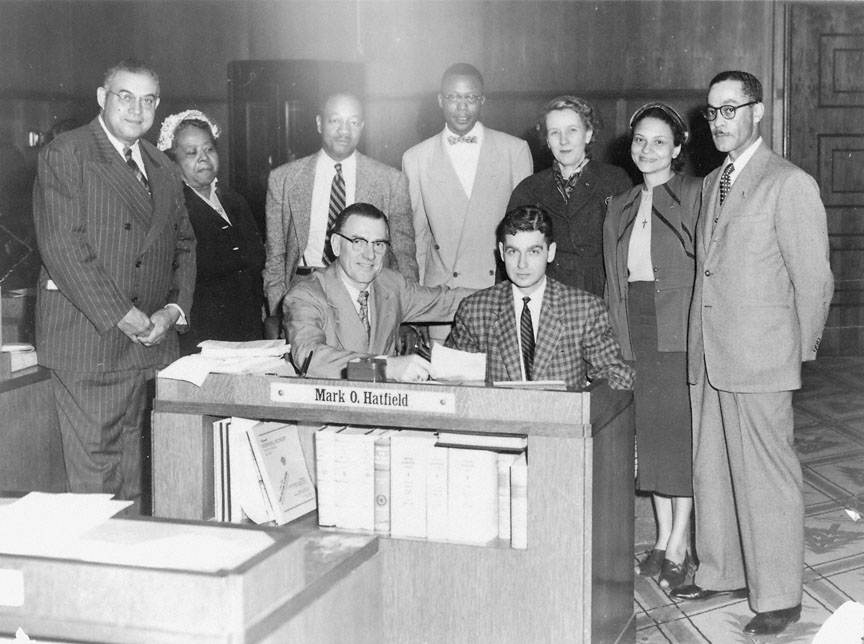
 Proponents of Oregon's 1953 Public Accommodations Bill, also known as the Civil Rights Bill. The legislation required "full and equal accommodations, advantages, facilities and privileges of any place of public accommodation, resort or amusement, without any distinction, discrimination or restriction on account of race, religion, color or national origin.” (Image courtesy Oregon Historical Society)
1951
Law prohibiting interracial marriages repealed; Fourth Tillamook Burn destroys 130,000 forest acres
1952
Constitution amended to provide for equal representation in state legislature
1953
Public Accommodations Law prohibits racial discrimination by businesses
1954
Congress terminates Western Oregon tribes; Supreme Court upholds Brown v. Board of Education, abolishing segregated schools
1956
Congress authorizes Interstate freeway system; Congress terminates Klamath Tribe
1957
Oregon Fair Housing Act passes
1959
Oregon ratifies 15th Amendment to the U.S. Constitution 89 years after its adoption; First Oregon Bulletin published
1960
Congress passes Multiple-Use Sustained-Yield Act for management of national forests; Mercedes Deiz first Black American female lawyer in Oregon; First female U.S. Senator from Oregon, Maurine Neuberger, elected
1962
Columbus Day Storm causes major damage in western Oregon; Oregon State University football player, Terry Baker, (QB) becomes state’s first Heisman Trophy winner
1964
Death penalty abolished; National Civil Rights Act outlaws unequal voter registration requirements and racial segregation in schools, the workplace and public places
1965
Congress passes Voting Rights Act, which prohibits qualifications or prerequisites to voting
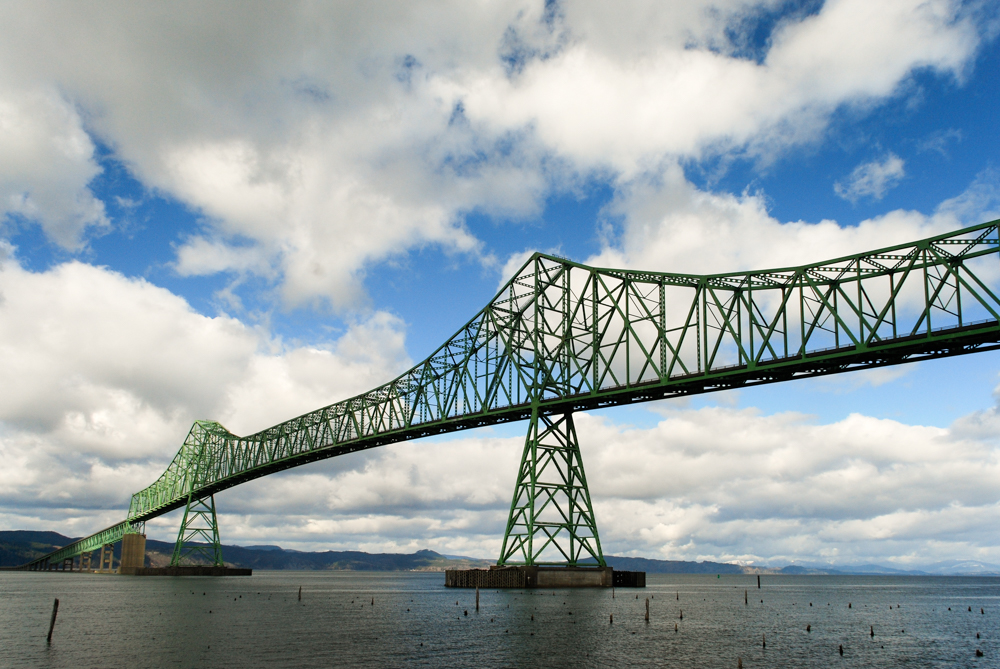 The Astoria-Megler Bridge over the Columbia River. (Oregon Scenic Images collection)
1966
Workmen complete Astoria-Megler Bridge spanning Columbia River estuary; I-5 affords non-stop driving through Oregon
1967
Beach Bill approved, ensuring public access to all of Oregon’s coastal beaches; Racial tensions escalate into riots in Portland
1969
Department of Environmental Quality created
Federal District Court in Sohappy v. Smith affirms Indian treaty fishing rights in Columbia River
1971
Bottle Bill approved; Congress confirms Burns Paiute Reservation
1973
Statewide major land use planning legislation approved; Public Records Law for access approved; Public Meetings Law approved; Tillamook State Forest created; Congress approves Endangered Species Act; Oregon ratifies U.S. Equal Rights Amendment
1974
Congress creates John Day Fossil Beds National Monument; Oregon Health Sciences University forms from mergers; Governor Tom McCall sets odd/even gasoline refueling days
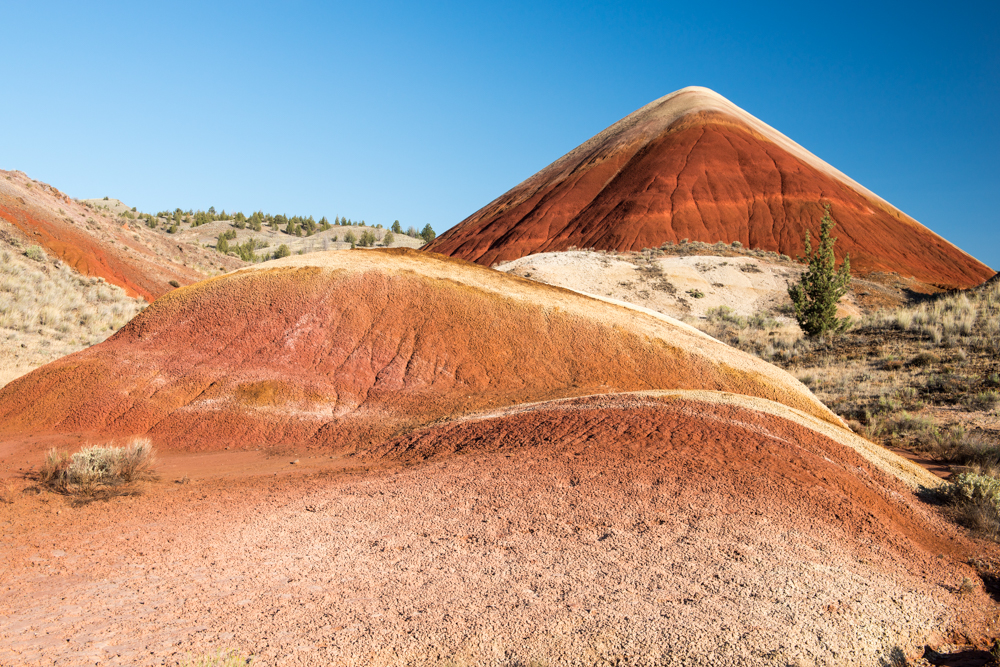 Colorful hills at the Painted Hills Unit of the John Day Fossil Beds National Monument near Mitchell. (Oregon Scenic Images collection)
1975
Congress creates Hells Canyon National Recreation Area
1976
First woman, Norma Paulus, elected secretary of state; Trojan, Oregon’s first nuclear power plant, built near Saint Helens
1977
Oregon first state to ban aerosol sprays by law; Congress restores Confederated Tribes of Siletz; First woman, Betty Roberts, appointed to Oregon Court of Appeals; Portland Trail Blazers win NBA Championship
1978
Death penalty reinstated
1979
Federal District Court in Kimball v. Callahan affirms Klamath tribal hunting and fishing rights within former reservation; Portland-area voters create “Metro,” the first elective metropolitan council in the U.S.
1980
Congress creates new Siletz Reservation; Mount St. Helens eruption disrupts ship traffic on Columbia River
1981
Bhagwan Shree Rajneesh establishes Rajneeshpuram near Antelope
1982
Congress restores Cow Creek Band of Umpqua Tribe; First woman, Betty Roberts, appointed justice of Oregon Supreme Court
1983
Congress restores Confederated Tribes of Grand Ronde
1984
Congress restores Confederated Tribes of Coos, Lower Umpqua and Siuslaw; First Oregon lottery ratified by voters; First Black American woman, Margaret Carter, elected to state legislature
1985
Bhagwan Shree Rajneesh deported and fined $400,000; First woman, Vera Katz, selected speaker of Oregon House
1986
Congress restores Klamath Tribe; Metropolitan Area Express (MAX) begins light-rail service in Portland
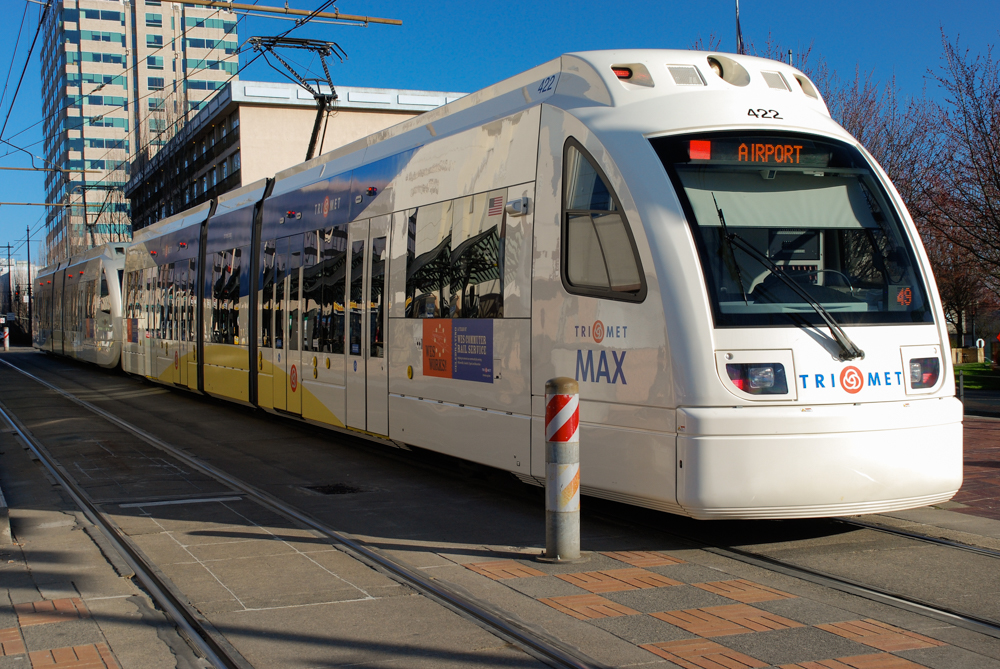 The TriMet MAX light-rail transit train at the Oregon Convention Center in Portland. (Oregon Scenic Images collection)
1988
Congress creates Grand Ronde Reservation; Congress approves Civil Liberties Act paying $20,000 to each surviving interned Japanese American; Ballot Measure 8 bans discrimination based on sexual orientation
1989
Congress restores Coquille Tribe; African exchange student Mulugeta Seraw killed by racist skinheads in Portland
1990
Ballot Measure 5 limits property taxes to support schools and government; U.S. Department of Fish and Wildlife lists Northern Spotted Owl as endangered
1991
First woman, Barbara Roberts, elected governor
1992
First African American, James A. Hill, Jr., elected to statewide office as state treasurer; First gaming compact for casinos signed with Cow Creek and Umpqua Tribes
1993
First statewide vote-by-mail election held in U. S.
1994
First Death With Dignity Act approved, permitting doctor-assisted suicide
1996
First vote-by-mail election for federal office held
1998
Metropolitan Area Express (MAX) extends light-rail service 18 miles west from Portland
1999
New Carissa, freighter runs aground near Coos Bay; U.S. Department of Fish and Wildlife lists several salmon species from Columbia and Willamette rivers as endangered
2002
First Hispanic woman, Susan Castillo, elected to statewide office as school superintendent; Forest fires leave nearly 100,000 acres burned; Measure requiring removal of racist language from state Constitution passes
2003
Oregon begins 10 year plan to fix deteriorating bridges
2004
Trojan, Oregon’s only nuclear power plant, decommissioned; L. L. Stub Stewart State Park opens - Oregon’s first new state park campground in more than 30 years
2005
Oregon State Quarter released with design featuring Crater Lake
2006
Trojan, Oregon’s decommissioned nuclear power plant, imploded
2007
Oregon’s constitution 150 years old; Sandy River’s Marmot Dam, built in 1912, removed; Oregon Equality Act passes
2008
New Carissa, freighter that ran aground on Coos Bay beach in 1999, dismantled and removed
2009
Oregon celebrates its sesquicentennial on Feb. 14, 2009; Oregon unemployment rate tops 12% amid recession
2010
Governor’s panel predicts 10 years of state budget deficits
2012
Oregon legislature begins annual sessions with the even-numbered years having a month-long session in February
2013
Klamath Tribes’ senior water rights in Upper Klamath Basin reaffirmed by courts; Drought and lightning produced most expensive wildfire season on record, leave over 100,000 acres burned; Josephine County’s last sawmill closes for lack of logs
2014
U.S. District court strikes down same-sex marriage ban; Voters approve recreational marijuana use; Equal Rights for Women in Oregon Constitution; University of Oregon football quarterback Marcus Mariota wins the Heisman Trophy
2015
Governor John Kitzhaber resigned Feb. 18, 2015, Secretary of State Kate Brown becomes governor according to the order of succession required by the Oregon Constitution; Minoru Yasui, Hood River Attorney, posthumously awarded the Presidential Medal of Freedom in recognition of his challenge of a military curfew placed on Japanese Americans during World War II and for his lifetime of civil rights work.
 The 2017 total solar eclipse as seen from Lebanon. (Oregon Scenic Images collection)
2016
Armed militants seize and occupy the headquarters of Harney County’s Malheur National Wildlife Refuge for 41 days
2017
Total solar eclipse across Oregon on August 21, 2017 (the path of totality includes Lincoln City, Newport, Salem, Albany, Madras, Baker City and Ontario); Senate Bill 13, the “Tribal History/Shared History” law, is enacted, directing the Oregon Department of Education to create a K-12 Native American curriculum for inclusion in Oregon’s public schools; Oregon’s 158-year-old Constitution is professionally restored
2018
Justice Adrienne C. Nelson is appointed to the Oregon Supreme Court, making her the first Black woman to sit on the state’s highest court; Colin O’Brady becomes the first person to traverse Antarctica solo and unaided
2019
The Devil’s Staircase in the Oregon Coast Range is designated a federal Wilderness Area; Blockbuster Video in Bend becomes the world’s last Blockbuster movie rental store
2020
National racial unrest spurs spring/summer protests around the state; Governor Brown invokes the Emergency Conflagration Act as fires threaten structures in nine Oregon counties; A Washington County man is Oregon’s first diagnosed COVID-19 case on February 28, 2020; A Multnomah County man is Oregon’s first reported COVID-19 death on March 14, 2020; Oregon gave its first COVID-19 vaccines in four Oregon hospitals
2021
Juneteenth and Indigenous Peoples’ Day become state of Oregon holidays; In June, Oregon saw three consecutive days of record-breaking heat across the state, tying the statewide all-time high temperature of 119°F in Jefferson County; Oregon receives a sixth Congressional district and completes redistricting
2022
Three women are on the ballot to become Oregon’s next governor; The World Athletic Championships are held in Eugene, bringing together the world’s best track and field athletes
2023
Secretary of State Shemia Fagan resigns. Republicans in the Oregon Senate stage a six-week walkout during the legislative session. 50th Anniversary of landmark Senate Bill 100, which created land use laws to preserve farmland; Archaeologists uncover evidence of oldest human-occupied site in North America at the Rimrock Draw Shelter site near Burns
2024
Removal of dams along the Klamath River allows salmon to move freely for the first time in generations; Wildfires burn more than 1.9 million acres, much of it rangeland; Oregon has second-largest measles outbreak in the nation